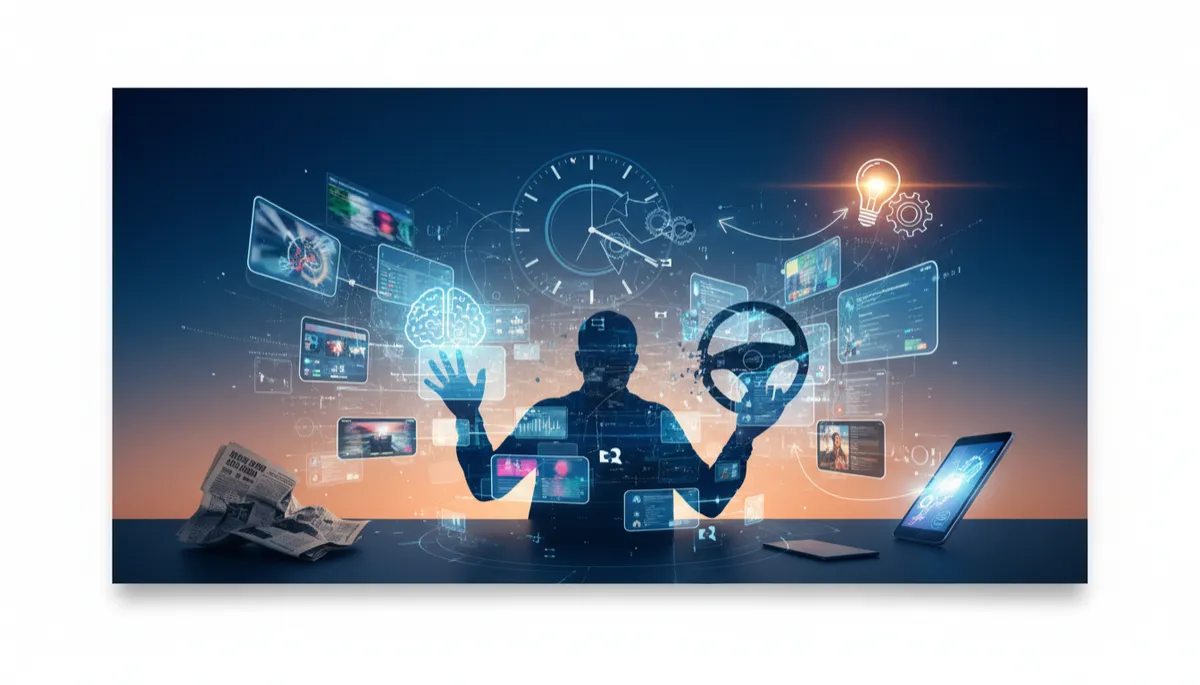
Mastering Focus in the Age of Distractions
Leadership, Focus, Productivity
The Age of Great Distractions
We live in a time when almost everything competes for our attention. For leaders, pastors, educators, and communities that Dr. Mikel Brown serves, this constant noise is not only an annoyance. It is a direct threat to focus, productivity, and long term success.
Technology, Information, and the New Noise
Modern technology has multiplied our access to information. Every moment, news feeds refresh, group chats buzz, and social platforms invite another scroll. What began as tools for connection have become engines of interruption. Instead of choosing what matters, many people live in reaction to whatever appears on a screen next. This constant stream of alerts fragments attention, making it difficult to stay with one task long enough to produce meaningful work.
Information overload is not only about quantity. It is also about pace. Our brains are processing more decisions in a day than previous generations handled in a week. Without disciplined filters, leaders and teams become mentally exhausted, which leads to poor judgment, shallow thinking, and unfinished priorities.
Attention, Health, and Hidden Costs
The age of great distractions has also shaped how we think and feel. Reports of attention deficit related challenges have increased, especially among young people who have grown up with constant digital stimulation. While not every case of attention deficit disorder is caused by technology, a culture that trains the mind to expect instant rewards and constant novelty makes sustained focus harder for everyone. Brains that rarely rest rarely reach depth.
The impact is not limited to mental health. Distraction travels with us into cars, buses, and sidewalks. Texting while driving, checking notifications at traffic lights, or scrolling through feeds as pedestrians all increase the risk of accidents. A moment of divided attention can become a lifetime of regret. Leaders are called to model disciplined behavior, not only for productivity, but for safety and stewardship of life.
From Newspapers to Never Ending Feeds
Not long ago, the daily newspaper or an evening news broadcast framed how people consumed information. You chose a time, sat down, and read or watched with relative focus. The experience had a beginning and an end. Today, many people wake up and reach for a phone before they reach for purpose, prayer, or planning. Instead of reading a single paper, they scroll through endless headlines, videos, and opinions that pull the mind in every direction.
This cultural shift from deliberate reading to constant checking has reshaped habits. Families sit at the same table while each person looks down at a private screen. Leaders sit in meetings while glancing at messages that have nothing to do with the agenda. The result is shallow engagement and weak connection. We are present in body, but absent in attention.

The leaders who look up from their screens often become the ones people follow.
Distraction, Productivity, and Long Term Success
Reduced productivity is one of the most visible costs of distraction. Every time you switch from a task to check a message or social feed, your brain must refocus. Research often shows that this refocusing tax can consume more time than the distraction itself. Over a day, those small interruptions can steal hours of deep work. Over a year, they can steal entire projects, ideas, and opportunities that never fully mature.
Focus is a competitive advantage. In leadership, ministry, education, and business, those who can give their full attention to a problem, a person, or a plan will outpace those who live in constant reaction. Success rarely belongs to the busiest. It belongs to those who can direct their energy toward what truly moves the mission forward. Distraction is not just an inconvenience. It is a silent enemy of calling, stewardship, and destiny.
Managing Distractions at Work, School, and Home
Leaders cannot remove every distraction, but they can manage their environment with discipline. At work, this may begin with scheduled focus blocks. During these times, notifications are silenced, email is closed, and only one priority is allowed on the desk. Teams can agree on communication norms that respect deep work, such as using messages for non urgent issues and reserving meetings for decisions that truly require collaboration.
In schools and universities, educators can model device boundaries. Clear guidelines about when laptops and phones are used for learning and when they are put away support students in building attention muscles. Parents and mentors can reinforce these habits at home through tech free meals, reading time, and intentional conversation without screens present. Small practices build strong minds.
In daily life, simple rules make a difference. No phones while driving. No screens as the first and last activity of the day. No multitasking during important conversations. These choices protect safety, relationships, and mental clarity. They also signal to others that focus is a value, not an accident.
💡 Pro Tip: Treat your attention like money. If you would not waste dollars on every impulse, do not spend your focus on every notification.
Working Smarter in a Distracted World
The age of great distractions rewards those who work smarter rather than harder. Working harder often means adding more hours filled with more interruptions. Working smarter means designing your day so that your best energy is invested in your highest priorities. This includes planning your schedule, setting clear goals, and using tools intentionally instead of automatically. Technology should serve strategy, not replace it.
For pastors, leaders, and organizations, this approach aligns with the mission of Dr. Mikel Brown. Disciplined thinking, financial literacy, and purpose driven leadership all require focused attention. When you reclaim your focus, you reclaim your ability to lead people, steward resources, and navigate uncertainty with confidence. Distractions do not disappear, but their power over your decisions does.
If you are ready to build a more focused life and organization, explore the books and resources from Dr. Mikel Brown, invite him to speak to your team or congregation, or join the Platinum Partnership Community. In an age of great distractions, choose to become a leader of great focus.
